- Client
- Helvetis
- Location
- Switzerland
- Industry
- Wind Energy and Inspection
- Period
- Longer collaboration, last work in 2025
30 to 60 min
turbine downtime per inspection, previously a full day
15 to 20
turbines per day as a typical figure, depending on the weather
Starting point
Inspecting wind turbine blades took a long time and a lot of money, and it put technicians at risk. Each inspection meant shutting the turbine down for a full day and sending a technician up with climbing equipment to examine the blades by eye. The findings then had to be documented and passed on to the owners by hand.
Helvetis wanted to automate the whole chain, from capturing blade images to assessing damage and reporting to the turbine owners.
What we built
Two connected tools that work together from capture to report.
Tablet app for drone operators: It controls the drone while it captures high-resolution images of each blade. Camera stabilisation, focus and capture settings run automatically, with live video over Wi-Fi and real-time telemetry.
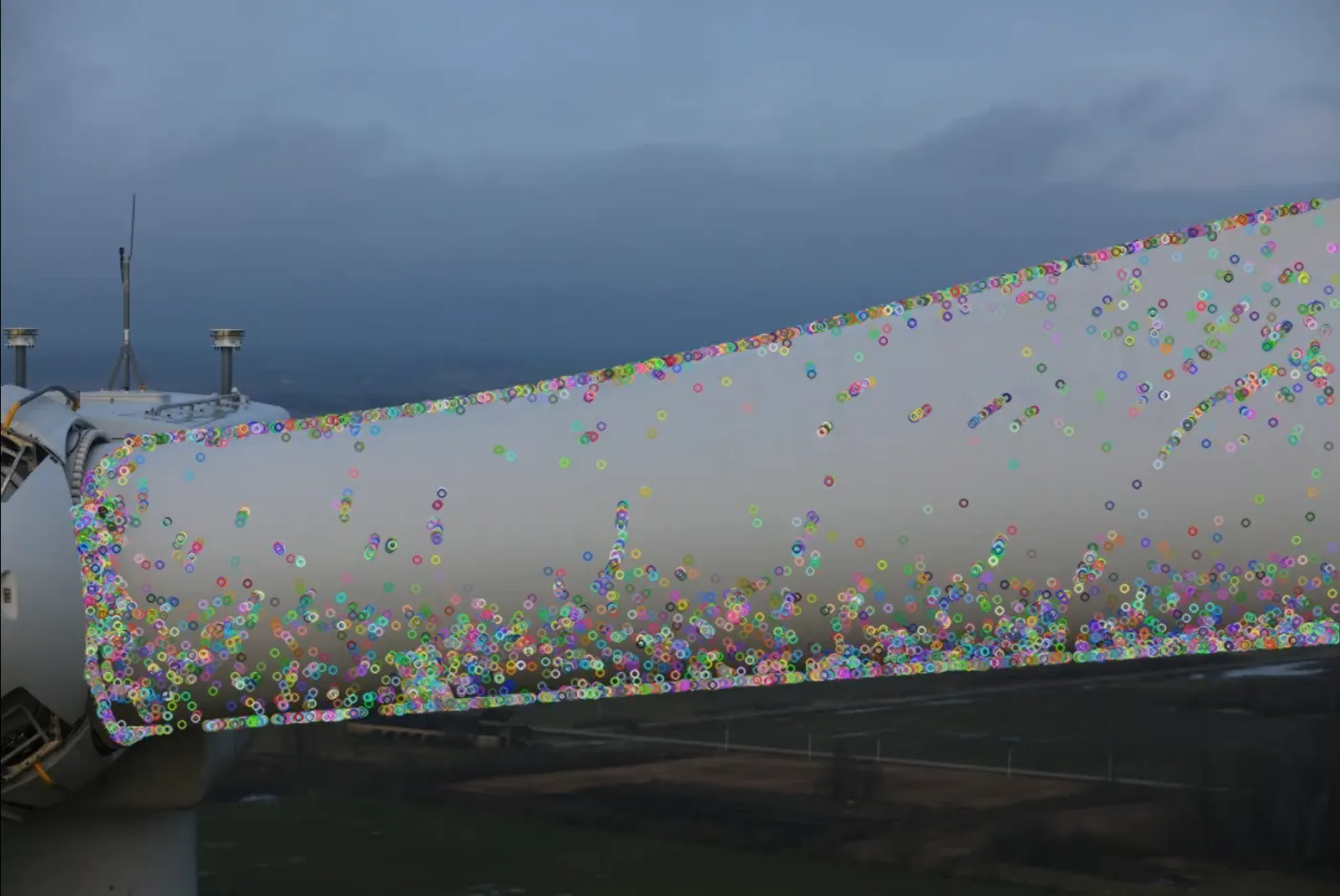
Cloud inspection portal (Microsoft Azure): A shared workspace for inspectors, defect specialists and turbine owners. Uploaded drone photos are automatically stitched into a complete image of the blade; pre-assembled images are supported as well. Automatic defect detection using computer vision and machine learning flags potential damage. Specialists mark, classify and describe each damaged area in a defect editor, and owners follow the inspection progress and generate their reports directly in the portal.
Result
Blade inspections no longer require rope access: technicians stay on the ground while the drone captures the images. Each inspection takes a turbine offline for 30 to 60 minutes instead of a full day. Depending on the weather, around 15 to 20 turbines a day is typical.
One digital workflow replaces manual notes, photos and reports, from capture to the owner report. Inspectors, defect specialists and turbine owners work on the same platform.
Technologies